


Movement IV — Reconstruction & Legacy
The Architecture That Outlasts the Reformer
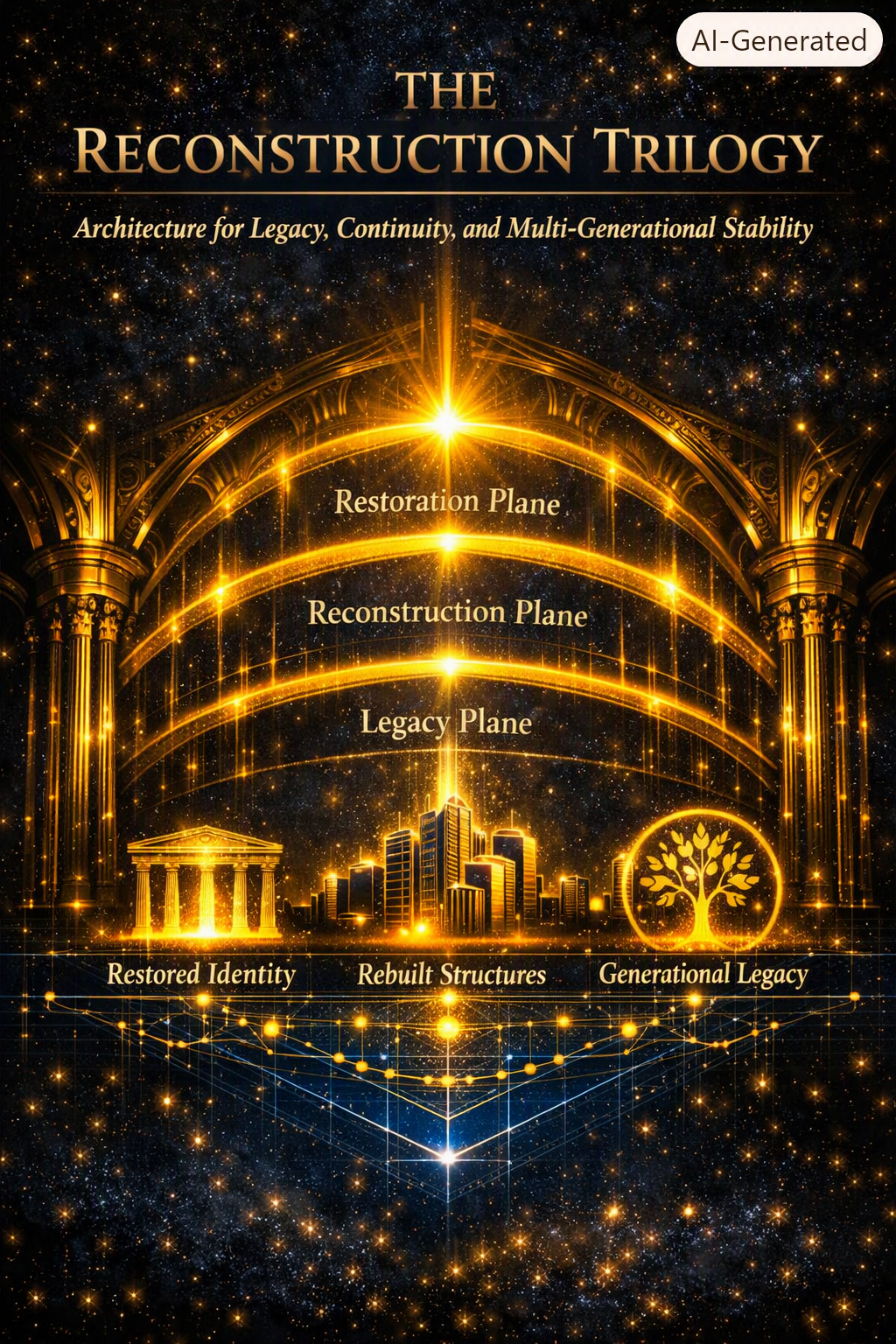 Movement IV of the Kingdom House Canon reveals the reconstruction architecture — the systems, patterns, and generational structures that secure legacy, continuity, and multi‑generational stability.
Where Movement I rebuilds the person, Movement II builds the system, and Movement III establishes governance, Movement IV builds what outlasts the Reformer.
This trilogy establishes:
-
Reconstruction
-
Legacy
-
Generational Infrastructure
-
Long‑Term Stability
-
Multi‑Generational Continuity
-
Covenantal Succession
It is the legacy architecture of the Canon — the movement where the Reformer becomes a builder of generational systems, ensuring the work continues beyond their lifetime.
“Reconstruction is the architecture of continuity. Legacy is the structure that remains when the Reformer is gone.”
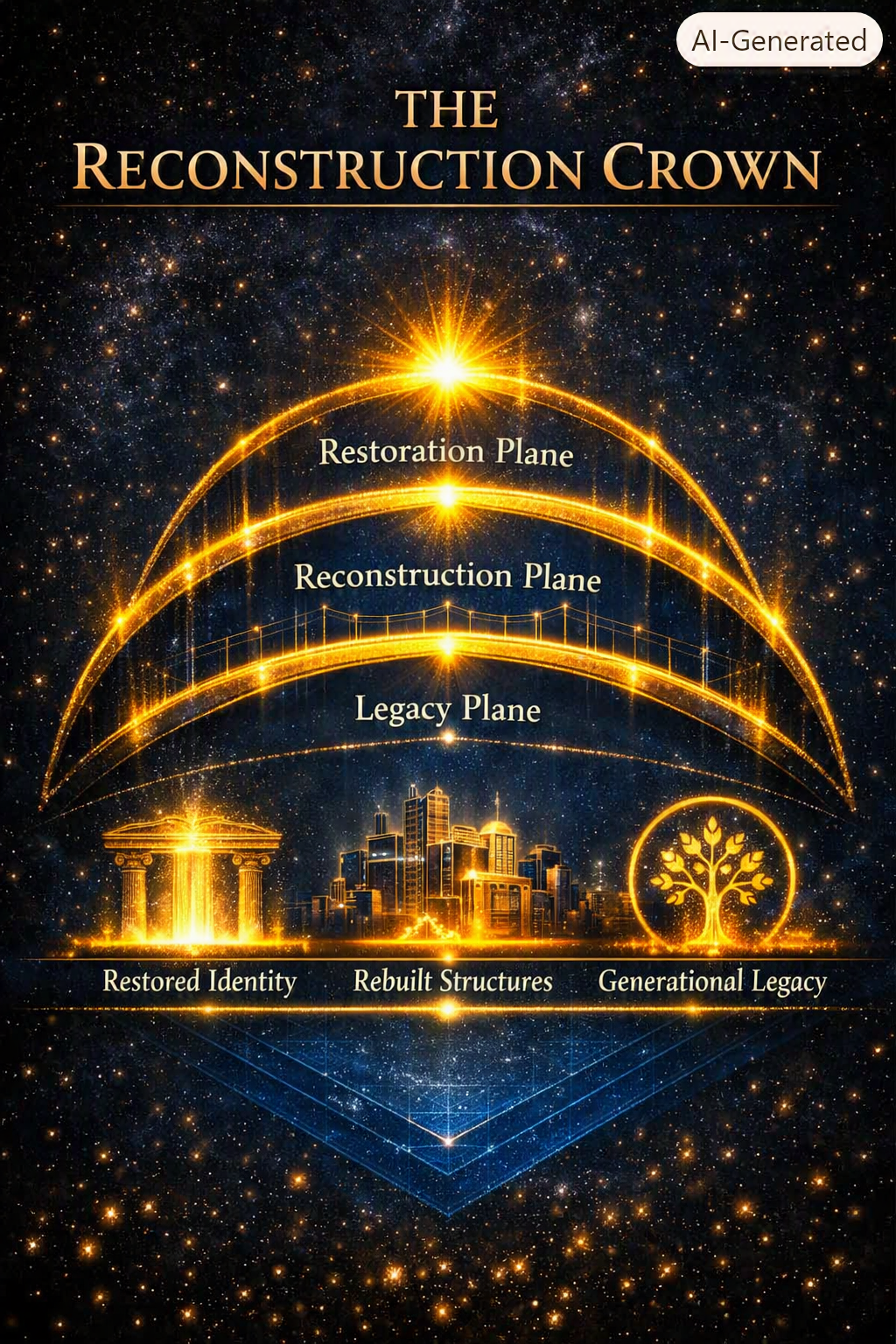
The Reconstruction Crown illustrates the three movements of Kingdom restoration — what God restores, what He rebuilds, and what He establishes for generations.
The upper arcs represent the Restoration Plane, Reconstruction Plane, and Legacy Plane — the ascending process through which divine order repairs identity, rebuilds structure, and transfers continuity.
Beneath them, the three Legacy Fields reveal the visible outcomes of this movement: Restored Identity, Rebuilt Structures, and Generational Legacy.
Together, these planes and fields form the Reconstruction Architecture of Movement IV — the completion of the Canon’s arc, where the Reformer becomes a generational builder and the Kingdom’s foundations are renewed.
BOOK 10 — RECONSTRUCTION ARCHI-TECTURE
The Blueprint of Repair, Restoration, and Structural Renewal Book 10 reveals the architecture of reconstruction — the laws, patterns, and structural mechanics that govern repair, restoration, and long‑term rebuilding.
Core Domains
-
Architecture of reconstruction
-
Laws of repair and renewal
-
Mechanics of structural restoration
-
Patterns that rebuild identity at scale
-
Systems that stabilize transformation
-
Blueprint of multi‑layered reconstruction
Purpose: The reconstruction manual — transitioning the Reformer from governance to generational repair.
BOOK 11 — LEGACY FORMATION
The Architecture of Continuity, Succession, and Generational Stability Book 11 reveals the architecture of legacy — the structures, laws, and generational mechanics that secure continuity across time.
Core Domains
-
Architecture of legacy
-
Laws of continuity and succession
-
Mechanics of generational stability
-
Patterns that preserve identity across generations
-
Structures that prevent collapse in lineage and systems
-
Ascent from stewardship to legacy formation
Purpose: The continuity manual — establishing long‑term stability within the Canon’s architecture.
BOOK 12 — GENERATIONAL INFRA-STRUCTURE
The Architecture of Multi‑Generational Systems and Covenant Continuity Book 12 reveals the architecture of generational infrastructure — the systems, frameworks, and covenantal structures that secure multi‑generational continuity.
Core Domains
-
Architecture of generational infrastructure
-
Laws of covenant continuity
-
Mechanics of multi‑generational systems
-
Patterns that stabilize lineage and legacy
-
Structures that preserve reformation across eras
-
Infrastructure for generational ascent
Purpose: The infrastructure manual — completing the Canon and establishing architecture that outlasts the Reformer.
META‑STRUCTURE OF THE RECONSTRUCTION TRI-LOGY (Books 10–12)
The Legacy Architecture of a Reformation Era
| Book | Domain | Function |
|---|---|---|
| 10 – Reconstruction Architecture | Structural Repair | Rebuild systems, restore foundations, stabilize transformation |
| 11 – Legacy Formation | Continuity Architecture | Establish succession, preserve identity, secure generational stability |
| 12 – Generational Infrastructure | Multi‑Generational Architecture | Build covenantal systems, stabilize lineage, secure continuity acr |
Together, Books 10–12 form: The Reconstruction Architecture of a Reformation Era — completing the Canon’s fourth movement: Identity → Formation → Governance → Reconstruction.


